Friday, April 17, 2015

Why a world?


Last week, I went on a tangent talking about Segways and universes without really explaining what the Segway led to. Of course, you probably figured it out. I’m going to spend the next few weeks talking about worlds in fiction, and how to create one of your own.
Shocker, I know.
 
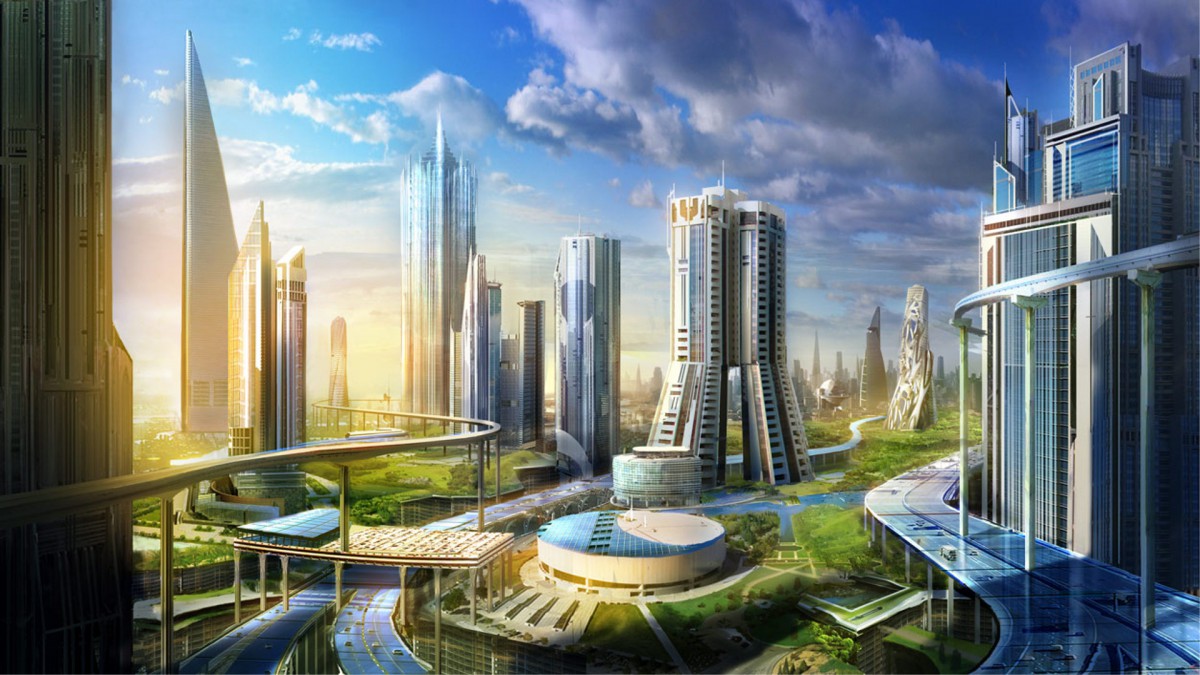
(image found via Google search)


Every good story has three things: plot, characters, and setting.
All good stories use each of these things to create a compelling tale that you, the reader, can’t put down. The vibrant fantasy of Way of Kings (Brandon Sanderson), the charming Alabama county in To Kill a Mockingbird (Harper Lee), dangerous high seas in Treasure Island (Robert Louis Stevenson), and IT’s domain in A Wrinkle in Time (Madeleine L'Engle). Dozens of stories contain worlds that whisk us away from our own (boring or not) lives to places we wish we could go.
Each of the stories I mentioned are in different genres. Two of them are even in our world. They prove you don’t need another world to make the setting of a story great. However, sometimes that other world is exactly what your story needs.

Now what?
What do we do, knowing we need a setting just as much as a plot and characters? We could just base our alternate history steampunks in London, our fantasies in England and Scotland and France, our sci-fi in future America. Those are all good and well, perfect for some stories.
But why not make our own?
If the universe we looked at last week inspires us so much, why not try and make world for our novel? Why not a universe?

The negative answer might be: “because it’s impossible to make a world”, or perhaps “that’s too much work, Nottinghamshire will do just fine for my dragons and magic”.
Sure, sure.
We can’t make a world that works just as well as our own. No one can work out every single detail, every single life and death and balance and imbalance. Not a single universe a writer creates will be infinite.
But we can sure try.

Other worlds draw our attention, don’t they? Tolkien’s Middle Earth almost screams at us to take a look, see how colorful the past is? “Check out my history,” Middle Earth begs, “come see how brilliant it all fits together.”
And we do. Most everyone* will willingly delve into this vibrant world painted through Tolkien’s epics. Hobbits and Elves and Ents and Orcs and magic Rings pull us in and set us down in the center of the Old Forest, daring us to find Tom before dark.

Narnia whisper through the wardrobe: “come and see”.
Mazes demand to be solved.
Games dare us to be the last one standing.
Prophecies warn of impending doom.

History, magic, technology, culture, races, governments, animals, food, geography, cities, dragons, cyborgs, danger, darkness. Worlds we don’t live in offer their best, and we dive into them willingly.
They look like they do it with ease, offering us magic in one hand and evil sorcerers in the other. But then we try and create our own, and suddenly everything becomes overwhelming.
How do you reconcile four timelines?
How can my magic work?
Is time travel feasible?
What if this culture frowns upon walking?
Does History have to be complete?
Does..
What…
How..
If…
Because…

…

Our minds shut down, and we give up. It’s too hard, we say. Let the geniuses make worlds, we’ll stick with Hampshire and Londontown.
Not today.
Not while we have something to say about it.
Today we’re going to refuse to settle.
Pick up the pen, the pencil, the keyboard, the dry-erase marker. Gather your spare notebooks and Word documents. Set aside the outlines and rough drafts and formidable forests. Pull on the welding mask, get your hands dirty. Start building.

*I say most because some people don’t. To each their own.

Friday, April 10, 2015

Worlds torn Asunder


This ought to be short and sweet, considering several things. 1) I’m currently busier than oxen pulling a plow during planting season, and 2) I consider this post a Segway into longer posts.

With the reasons behind us, let us begin the Segway.


Okay, fine, the real Segway:

I love the universe. It’s pretty awesome, when you stop to look at it. Distant galaxies, stars and supernovas and black holes and comets and dust clouds and really, really cool looking infrared pictures. The complexity and strangeness of the science behind it amazes me, from the grand scale of galaxy clusters to the tiny (by comparison) workings of a few planets orbiting a backwater yellow dwarf star.
Imagine with me (imagining is a lot of fun, isn’t it?) for a moment you stand outside the universe. You can survey every speck of it at once, on a broad scale. Now, zoom in.
No, no, no, not on /that/ galaxy, that other one.
Yes, there. A pretty looking galaxy, with a spiral-y look to it. The inhabitants call it the Milky Way, poor little mortals. Zoom in further, because our imaginations are cameras with infinite resolution, and we can do that. You’re now looking at an out-flung arm, toward a solar system that isn’t very large or spectacular or worth a tourist stop. Adjust the focus, and zoom in on one little world, a planet called Earth.
Now imagine (because we can’t just stop there) that you can see all of time stretched out before you. Focus on the past (it’s much easier to comprehend and all that), look at this planet. Look at how complex lifeforms are, how diverse the ecology is, and so forth. Spend some time considering the complexities of the society of humans as time progresses. It’s a wonderful thing, isn’t it?

All right, you can take your 3D glasses off, and stick your imagination back in the – wait, one last thing:
Before you go, before I just drop you off with a cliffhanger that really makes no sense and doesn’t tell you at all what I’m Segway-ing into, imagine one more thing with me:

What if you could create a world?

To take this further, what if you could make it just as complex and real as the one we live in?


*as usual, I hold no copyright to any pictures or gifs I post, I find most of them in my perusing around the internet, or thanks to Google. 

Friday, April 3, 2015

Perfected and Demolished – the worlds of Utopia and Dystopia


Take a stroll down popularity lane, with me, for just a moment. Look at movies, books, music, etc. Watch what people read and watch and listen to for entertainment.
There’s a whole lot of diversity, thanks to humans being… well… human, but there ought to be one very, very noticeable trend. It’s most especially found among the teens and college-aged.

Dystopian.

It’s a word most everyone will recognize, even if they don’t know what it means. The idea of a dystopia fascinates people. [As a side note, for those of you who didn’t recognize that word, have a definition.]
Another world you might hear and see is Utopia. It’s not as popular, but every Dystopian world has tinges of Utopia. I’d like us to examine these two genres (or world-types, if you want to be specific) and shed a light on their popularity.

Dystopian

Of the two, the idea of a world gone wrong seems to draw more attention. For the longest time, I couldn’t understand why people were so drawn to the idea of a world where everything went wrong and mankind is reduced to living in the ashes of technology. Then I actually read one. My introduction to Dystopian was The Hunger Games by Suzanne Collins. I’d like to circumvent discussion about the quality of these books* and get straight to the point: I fell in love with the idea of a broken world.

Dystopian has exploded in recent years, with the publishing of the aforementioned Hunger Games, the Divergent Trilogy (Veronica Roth), The Maze Runner (James Dashner), and more, such as The Rithmatist (Brandon Sanderson).

Having read many of them, I’ve come to a conclusion for why people love this genre: we fear it.
Look at how so many Dystopias come to be: nuclear wars, alternate histories, oppressive government, ‘what-ifs’, and so forth. Dystopias thrive on the fears of the masses. Everyone fears what might happen if nuclear warfare wiped out most of the planet, even if that threat is far less eminent than it was thirty/forty years ago. Closer to home strikes the idea that the government has become totalitarian and subjugated the people (or sometimes something more specific, like art, books, music, etc.).
Everyone is scared of something. Dystopian uses those common fears (the rational and irrational together) to make something we can’t help but be fascinated by.

Utopian 

The idea of a perfect world is hard to comprehend, which is perhaps why people read books written about them. However, they’re often less popular than Dystopias. The basic answer to that is this: no one pictures the same perfect world as the next person. What is your idea of a perfect world? If you could just snap your fingers and everything would be just right for you, what would it look like?
To the scientist, technology would be maximized, the universe explored, conflicts solved by science, and the human variable minimized.
To the politician, the world would be at peace, consolidated under one respective, benevolent power (probably themselves).
To the pacifist environmentalist, perfection would be mankind living at peace with everything, especially nature.
To me, perfection isn’t any of those things.
What about you? I doubt your view of perfection molds to something else’s ideas. Which is why writing a Utopia is hard. It’s coming up with a perfect world and sharing it with everything. Chances are, few people will agree with your utopia.

If you look once more at popular books with me, what do you notice about the Dystopias?
You might notice common trends in the plots (evil totalitarian government as the antagonist, with a rebel protagonist), the characters (strong female leads, dead or incapacitated parents, innocent younger siblings, rough friends and often weak allies), the themes (justice, diversity, freedom, individuality, optimism), and in the backstory of the world’s current decay.

I’d like to ignore the first several for the moment, and look at the last: the backstory of the world’s current decay. In so many Dystopias, what happens to the world before it crumbles?
It’s perfected.

Look at Hunger Games, for example. Before the Games, there is Panem, a country at peace with itself. Built in the ruins of America, it thrived. It’s a perfect society for the Capitol, prosperity for all. And then things go wrong. The Dystopian of the Games is built on what used to be the Capitol’s vision of Utopia. In fact, many of the rich citizens still fancy they are living in a Utopia.
Now let’s really quick glance at Divergent. It’s often called a Dystopian Utopian, for obvious reasons. In the first book, everything is perfect. The factions are thriving because they are the perfect way for everything to live together. It’s a Utopia built on the idea of categorization. Then everything starts falling apart.

Dystopian novels tackle the things we fear might happen in our future. The near future. Maybe even now. They point to things that could happen if we don’t fix our problems. They show what people used as solutions, and why those solutions didn’t work. Why technology, government, peace, war, categorization, and individualism, can’t or won’t work. Some of them are nihilistic. Many are clichéd. But all of them want us to keep hoping for something more.

Now it’s your turn. What do you like or dislike about Dystopias and Utopias?

*I am referring to the various arguments I’ve heard for or against the Hunger Games. As of yet, I’ve found neither side of the argument very convincing.
*I'd also like to note the pictures are not mine, and the copyright belongs to their respective owners. Found via Google.