Friday, April 3, 2015

Perfected and Demolished – the worlds of Utopia and Dystopia


Take a stroll down popularity lane, with me, for just a moment. Look at movies, books, music, etc. Watch what people read and watch and listen to for entertainment.
There’s a whole lot of diversity, thanks to humans being… well… human, but there ought to be one very, very noticeable trend. It’s most especially found among the teens and college-aged.

Dystopian.

It’s a word most everyone will recognize, even if they don’t know what it means. The idea of a dystopia fascinates people. [As a side note, for those of you who didn’t recognize that word, have a definition.]
Another world you might hear and see is Utopia. It’s not as popular, but every Dystopian world has tinges of Utopia. I’d like us to examine these two genres (or world-types, if you want to be specific) and shed a light on their popularity.

Dystopian

Of the two, the idea of a world gone wrong seems to draw more attention. For the longest time, I couldn’t understand why people were so drawn to the idea of a world where everything went wrong and mankind is reduced to living in the ashes of technology. Then I actually read one. My introduction to Dystopian was The Hunger Games by Suzanne Collins. I’d like to circumvent discussion about the quality of these books* and get straight to the point: I fell in love with the idea of a broken world.

Dystopian has exploded in recent years, with the publishing of the aforementioned Hunger Games, the Divergent Trilogy (Veronica Roth), The Maze Runner (James Dashner), and more, such as The Rithmatist (Brandon Sanderson).

Having read many of them, I’ve come to a conclusion for why people love this genre: we fear it.
Look at how so many Dystopias come to be: nuclear wars, alternate histories, oppressive government, ‘what-ifs’, and so forth. Dystopias thrive on the fears of the masses. Everyone fears what might happen if nuclear warfare wiped out most of the planet, even if that threat is far less eminent than it was thirty/forty years ago. Closer to home strikes the idea that the government has become totalitarian and subjugated the people (or sometimes something more specific, like art, books, music, etc.).
Everyone is scared of something. Dystopian uses those common fears (the rational and irrational together) to make something we can’t help but be fascinated by.

Utopian 
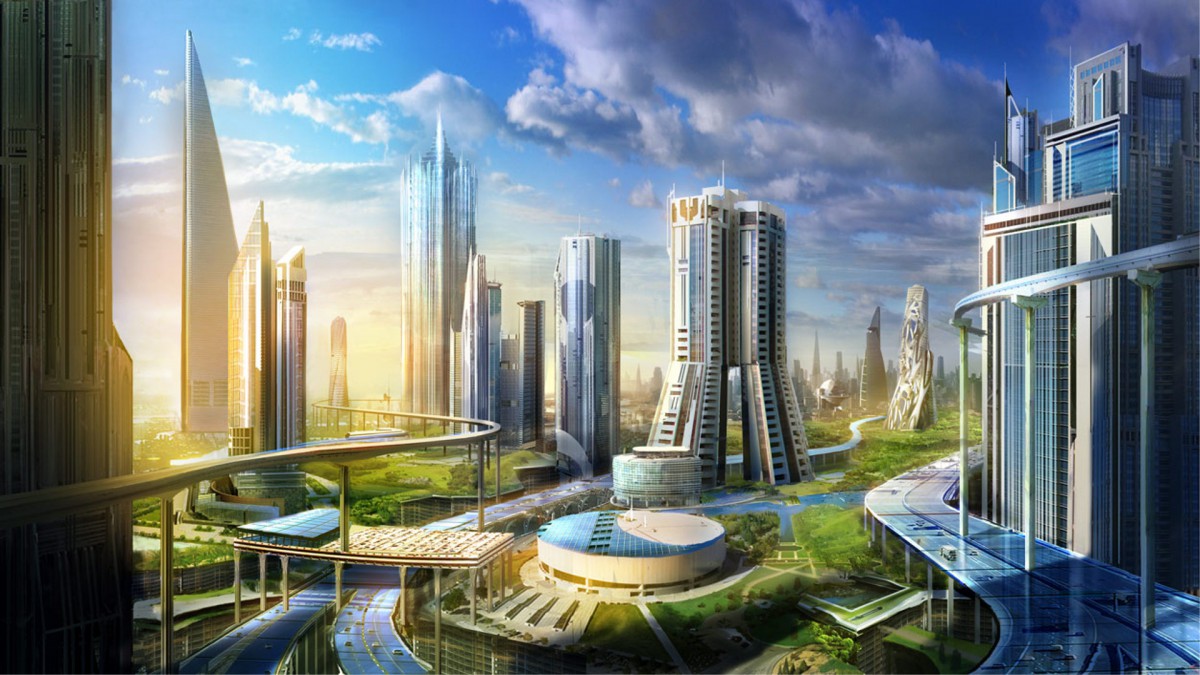
The idea of a perfect world is hard to comprehend, which is perhaps why people read books written about them. However, they’re often less popular than Dystopias. The basic answer to that is this: no one pictures the same perfect world as the next person. What is your idea of a perfect world? If you could just snap your fingers and everything would be just right for you, what would it look like?
To the scientist, technology would be maximized, the universe explored, conflicts solved by science, and the human variable minimized.
To the politician, the world would be at peace, consolidated under one respective, benevolent power (probably themselves).
To the pacifist environmentalist, perfection would be mankind living at peace with everything, especially nature.
To me, perfection isn’t any of those things.
What about you? I doubt your view of perfection molds to something else’s ideas. Which is why writing a Utopia is hard. It’s coming up with a perfect world and sharing it with everything. Chances are, few people will agree with your utopia.

If you look once more at popular books with me, what do you notice about the Dystopias?
You might notice common trends in the plots (evil totalitarian government as the antagonist, with a rebel protagonist), the characters (strong female leads, dead or incapacitated parents, innocent younger siblings, rough friends and often weak allies), the themes (justice, diversity, freedom, individuality, optimism), and in the backstory of the world’s current decay.

I’d like to ignore the first several for the moment, and look at the last: the backstory of the world’s current decay. In so many Dystopias, what happens to the world before it crumbles?
It’s perfected.

Look at Hunger Games, for example. Before the Games, there is Panem, a country at peace with itself. Built in the ruins of America, it thrived. It’s a perfect society for the Capitol, prosperity for all. And then things go wrong. The Dystopian of the Games is built on what used to be the Capitol’s vision of Utopia. In fact, many of the rich citizens still fancy they are living in a Utopia.
Now let’s really quick glance at Divergent. It’s often called a Dystopian Utopian, for obvious reasons. In the first book, everything is perfect. The factions are thriving because they are the perfect way for everything to live together. It’s a Utopia built on the idea of categorization. Then everything starts falling apart.

Dystopian novels tackle the things we fear might happen in our future. The near future. Maybe even now. They point to things that could happen if we don’t fix our problems. They show what people used as solutions, and why those solutions didn’t work. Why technology, government, peace, war, categorization, and individualism, can’t or won’t work. Some of them are nihilistic. Many are clichéd. But all of them want us to keep hoping for something more.

Now it’s your turn. What do you like or dislike about Dystopias and Utopias?

*I am referring to the various arguments I’ve heard for or against the Hunger Games. As of yet, I’ve found neither side of the argument very convincing.
*I'd also like to note the pictures are not mine, and the copyright belongs to their respective owners. Found via Google.

Friday, March 27, 2015

The Bird - a short

Today I thought I'd bring to the light something I wrote several months ago, which I've been rather puzzled about since.
I'm not sure what inspired it -  it's one of those things you write after midnight and don't understand the next morning, nor ever.
I've gotten several different views on what it [the Bird] represents, anything from a conscious to a Phoenix to Lies to Guilt. As of yet, I'm still not sure what I think it stands for (and I've always pictured it as more of an owl-like bird than a Phoenix?), but it still makes me wonder.
Enjoy (or don't) The Bird:


Day One:
The strange people who came here today forgot their little dead bird. Or at least I thought he was dead. This evening he opened his eyes and stared at me. I tried to throw him away (he seems to be frozen), but he just ends up back in my bedroom. I will give him back when they come again.

Day Four:
The bird is still watching me, it's little lifeless eyes moving back and forth as it takes in my features. Every once in a while it lets out a little chirp, making me jump. I wish it never came to me.
Everyone else stares at me in terror. They expect my shadow to start dancing, or at least to speak. Sometimes, so do I.

Day Six:
It's worse now that the bird is starting to move. First it flaps its puny little wings, and then turns its neck to follow me as I move. It flexes its talons twice every minute, as if reminding itself (and me) that it has weapons.

Day Ten:
I think it grew overnight.
Now it talks to me, in my mind. It begs me to set it free. Demands. Sometimes I dream of it, moving, flying, soaring. Diving. At me. I see its eyes glint in the sunlight as it dives toward me with beak open and talons wide. I wake in a cold sweat each time, shivering. And there it is, sitting frozen, staring at me with those calculating eyes.

Day Fourteen:
They came again, demanding to know where their bird is. I can't say anything now that will betray the bird. He is very insistent that I say nothing of him, and so I can't. If I so much as think of telling them my tongue glues itself to the roof of my mouth.
Every night I dream of him, tearing me to pieces. He's still growing; he can spread his wings a little, too. They reach as far wide as I am tall. The thoughts he speaks to me with scare me.

Day Nineteen:
Today I wish I was dead. The bird was gone when I awoke. There was a single feather left on his perch, and a note scrawled in dark red blood on my doorstep:
I will return for you.

Day Seventy:
The bird has not returned, even though I told them he was here, and gone.
They do not blame me, although they were angry. They know I could not have told them, even if I wanted to. Everyone in the village blames me, now. Crops are found scorched after only one night. A cool night. Fires rage even during storms, and those storms are infrequent now. I'm isolated from everyone. Even Dale, and I thought he loved me. No one speaks to me, and I am silent.
Silent forever.

Day One hundred twelve:
I'm living in a nightmare.
No one is left:
Kate, Dale, Greg, all dead.
Even of those I hate I am bereft,
And I can't make myself care.

Day One hundred twenty:
The bird came back today. He's as tall as me, and his feathers emanate a strange heat. The grass withers beneath his talons, each as long as my arm. He just stood there staring at me.
I'm naught but a shadow of myself: I've not had much to eat or drink, and no shelter. My clothes are rags, my once-long hair is knotted and disgusting.
I hate myself, and he hates me.
But I cannot make myself care. Never.

Day One hundred twenty-one:
He came again today, and stood staring at me for almost two hours this time.

Day One hundred seventy:
I hate him.
I hate me.
I hate the ground I sit on.
I hate the people who betrayed me.
I hate every scrap of decency left in this world.
I hate the darkness, the light, the sun, the moon.
I hate being wet, dry, hot, cold.
I hate, and yet he still comes.
I hate living, but cannot die.
I hate that the bird stares at me all day, now.
I hate.
Yet I live.

Day Two hundred:
At last he speaks to me.
"Why are you so desolate?"
The bird's voice is croaky, but very wise-sounding. I say nothing.

Day Two hundred two:
He asks the same question every single morning at dawn: "Why are you so desolate?"
I wish I was dead.

Day Two hundred ten:
I tried to kill myself today, with a sharp rock. I cut my own neck, and bled to death by noon.
I awoke this evening, with the bird still watching me, and my blood on the ground around me.
"Why are you so desolate?"

Day Two hundred thirty:
"Why are you so Desolate?"

Day Three hundred:
"Why are you so Desolate?"

Day Four hundred:
"Why are you so Desolate?"

Day Four hundred two:
I answer him today. My voice is far more raspy than his, now. I don't drink and don't eat, but do not die.
"Because of you," I tell him.

Day Four hundred three:
The bird is gone.

Friday, March 20, 2015

Fallen Angels


I thought I’d step away, for a little while, from my usual topics about writing, and bring you a review of a novel I finished recently, Fallen Angels. 
 
If you’ve read it, you already have a lot of images going through your head: some good, some not.

If you’ve heard of it from uber-conservative friends, you’re probably thinking of it as some kind of pagan book full of obscenities.

Fallen Angels is a historical fiction novel (by Walter Dean Myers) set in Vietnam in 1968. History buffs will recognize this date right away, and everyone else ought to have a vague idea of what that date means. Coupled with the country, it shouldn’t be too hard to figure out what this novel is about.
But just to humor you, I’ll sum it up: It’s about a young New Yorker (from Haarlem) who joins up and is deployed during the Vietnam War. It follows him and his unit through its deployment.

I’ll separate my review into a few small categories, but first I want to discuss what I meant in the third paragraph above. Fallen Angels is real. I mean that in the sense that it shows war and people for who and what they are. Fallen Angels is about as gritty a war novel as you can find. It’s not overly gory, but it’s intense, and there are moments where even I – very not squeamish – winced and hurried on. If someone made this novel into a movie and kept its contents intact, it’d get an R rating for strong language throughout, strong violence, and some sexual references.
This novel is not a child’s book. I wouldn’t recommend it to anyone under sixteen, and not to anyone with a weak stomach for violence and language.
Now that that’s over with, let’s get on with the real review:

Characters: This book is about a young fellow named Perry. He’s joined by a large cast of characters, including men like Monaco, Peewee, Johnson, and more. Each one of them is unique, and there are just enough of them that are quirky to make it humorous. The way they rub against each other in the wrong way makes the moments where they’re working as a team all that more real. They’re here to survive first, and friends just come as a byproduct.
A very real byproduct.
Even the way in which Myers deals with PTSD endears the reader to the characters. These aren’t the kinds of characters fangirls squeal over (in fact I doubt this novel has very many female fans to begin with), but they’re real. Lobel and Peewee become the reader’s best friend almost before Perry does. Even the characters we hate and those we’re supposed to hate are real to us. The Viet Cong are real people, even though, as it’s put by one character, “…they ain’t real till you know they names and what they eat. Then they real.” We don’t get any glimpses of the dietary habits of the enemy, but they’re still living, breathing beings.

Emotion: If there’s one thing this book does best, it’s emotion. It’s another one of those books that use the word ‘was’ well. It places just enough emphasis on things that are distant while making the constant tension, fear, and the almost-sick feeling of combat hang in the air. No two characters deal with what they do and what they see the same way, but each way is crafted wonderfully with just the right words.
There isn’t a single moment where the emotions are glossed over, even the ones the readers might not want to deal with. When the battalion (including Perry’s unit) have to burn the bodies of their dead, we see the shock, the desperation, the disgust, and the despair. Humanity isn’t sugar-coated, here.

Conflict and Resolution: Every chapter is filled with conflict. Some of them are little things, like which unit won the volleyball game, but a lot of the conflict is huge: skirmishes, suicide bombings, guerrillas and more. The characters live in a nightmare where they’ll never wake up. Right from the start we experience what it was like to be in Vietnam: from the heat and the bugs to the sicknesses to the landmines to the all-out firefights.
It’s not an easy read, especially when you consider how real these sorts of situations were, but it’s truthful.
The conflict forms a series of themes revolving around friendship and loyalty. Myers doesn’t cram in a bunch of patriot junk about being on the ‘right side’, he shows the fight for what it is: about surviving.
Lastly, this book ends at perhaps the best spot possible. I actually turned the page, hoping for more.
All I got was an ‘about the author’. *grumbles*
But then again, that’s how all endings should be.

I give Fallen Angels 8.5/10, disregarding whatever thoughts I may have about the mature content.